Road Construction Equipment in India: Types, Uses & How to Choose the Right Machinery
Road construction requires more than excavators and road rollers. From preparing the ground and levelling the surface to producing asphalt, laying pavement and compacting the finished road, every stage requires the right machinery.
See where each machine works
Select a layer of the road to see the machines used on it.
Based on the typical project stages in the comparison table below. Wheel loaders and tippers support work at every stage, and the exact combination depends on each project.
Road construction equipment in India is used for national highways, state highways, rural roads, expressways, industrial corridors, airport roads and urban infrastructure projects. Choosing suitable equipment helps contractors manage project schedules, improve productivity and maintain construction quality.
This guide explains the major types of road construction equipment used in India, their applications, important selection factors and what contractors should know before purchasing or renting machinery.
1. What Is Road Construction Equipment?
Road construction equipment refers to the machines used to prepare, build, surface, compact, repair and maintain roads. These machines perform activities such as excavation, earthmoving, grading, aggregate mixing, asphalt production, paving and compaction.
The equipment required depends on the road design, project size, soil conditions, construction materials and contract specifications. A rural road project may need a different combination of machines from a large expressway project.
2. Road Construction Equipment in India: Types and Uses
1. Excavators
Excavators are used for digging, removing soil, trenching, clearing construction areas and loading material. They are commonly deployed during the initial stages of road development.
Common applications:
- Excavation and site preparation
- Drainage and utility trenching
- Removal of unsuitable soil
- Loading earth and construction debris
When selecting an excavator, consider digging depth, bucket capacity, operating weight, working conditions and the availability of service support.
2. Motor Graders
Motor graders level and shape the ground to achieve the required road profile, slope and crossfall. They are particularly important during subgrade and granular layer preparation.
Common applications:
- Levelling road surfaces
- Shaping shoulders and embankments
- Preparing road foundations
- Maintaining unpaved roads
Blade control, grading accuracy, engine power and operator visibility are important considerations when choosing a motor grader.
3. Road Rollers and Compactors
Road rollers and compactors apply pressure or vibration to compact soil, granular material and asphalt. Proper compaction helps achieve the density and stability required by the project specifications.
Different machines are suitable for different materials. Smooth-drum rollers are commonly used for granular layers and asphalt, while padfoot rollers are used for many cohesive-soil applications. Pneumatic-tyred rollers can be used for particular asphalt compaction requirements.
Before choosing a roller, check:
- Material type and layer thickness
- Required compaction specifications
- Drum width and operating weight
- Vibration settings and working speed
- Site access and operating conditions
4. Asphalt Mixing Plants
Asphalt mixing plants produce the asphalt mixture used for bituminous road surfaces. They combine aggregates, filler and bituminous binder in controlled proportions.
Common configurations include batch-mix plants and drum-mix plants. The appropriate option depends on production requirements, mix specifications, project duration, site conditions and operational needs.
Contractors should assess production capacity, fuel consumption, emission controls, maintenance requirements and the quality-control systems available with the plant.
5. Asphalt Paver Finishers
Asphalt pavers distribute and lay asphalt mixture over the prepared surface. They help create a consistent pavement layer before rolling and final compaction.
Key selection factors include:
- Required paving width
- Expected laying capacity
- Layer thickness and material type
- Screed heating and levelling features
- Manoeuvrability and service support
The paver must work in coordination with asphalt supply and roller operations. Delays in material delivery or inconsistent paving speeds can affect productivity and surface quality.
6. Wet Mix Macadam (WMM) Plants
WMM plants prepare a mixture of aggregates and water for use in specified road base and sub-base layers. The material is produced to meet the project’s grading and quality requirements.
When evaluating a WMM plant, consider the required output, aggregate grading control, water distribution, maintenance access and integration with material-handling systems.
7. Bitumen Pressure Distributors
Bitumen pressure distributors spray bituminous material at a controlled rate for applications such as tack coats, prime coats or surface treatments, as specified in the road design.
Spray uniformity is important because an inconsistent application can affect bonding or the performance of the pavement layer.
Check spray-bar coverage, application-rate controls, heating arrangements, calibration and the equipment’s compatibility with the intended material.
8. Wheel Loaders and Tippers
Wheel loaders move aggregates, sand and other bulk materials around construction sites. Tippers transport soil, aggregates and other materials between loading areas, stockpiles, plants and work zones.
Their capacities should match the project’s material requirements and the output of the asphalt or aggregate-processing plant. Poor coordination between loaders, tippers and production equipment can create delays.
9. Road Marking Machines
Road marking machines apply traffic lines, symbols and other road markings after the relevant surface work is completed.
The required machine depends on the marking material, line width, project specifications and expected application volume. Contractors should also evaluate application accuracy, cleaning requirements and the availability of compatible materials.
3. Essential Road Construction Machinery Used in India: Quick Comparison
| Equipment | Main purpose | Typical project stage |
|---|---|---|
| Excavator | Excavation and earthmoving | Site preparation |
| Motor grader | Levelling and shaping | Subgrade and base preparation |
| Road roller | Compaction | Earthwork, base or asphalt layers |
| Asphalt mixing plant | Asphalt production | Pavement material preparation |
| Asphalt paver | Laying asphalt | Road surfacing |
| WMM plant | Aggregate-base material production | Base and sub-base works |
| Bitumen distributor | Controlled bitumen application | Pavement layer preparation |
| Wheel loader | Bulk material handling | Throughout the project |
| Road marking machine | Applying road markings | Finishing and safety works |
The exact equipment combination depends on the project’s technical specifications, construction method and contract requirements.
4. How to Choose the Right Road Construction Equipment in India
Buying road construction equipment in India without evaluating actual project requirements can increase operating costs and reduce utilisation. Contractors should assess the following factors before making a decision.
Project size and production requirements
Estimate the required output, working hours, construction schedule and quantity of material to be handled. Equipment capacity should be appropriate for the project rather than selected solely on the basis of maximum advertised output.
Purchase versus rental
Buying may be appropriate when equipment is expected to remain in regular use across multiple projects. Renting can be useful for short-duration work, uncertain workloads or specialised machinery that is not required frequently.
Compare total ownership costs with rental charges, transportation, maintenance, downtime and utilisation before deciding.
Fuel consumption and operating costs
The purchase price is only one part of the overall cost. Fuel, lubricants, maintenance, operator costs, spare parts and transportation can significantly affect the economics of a machine over its working life.
After-sales service and spare parts
Check the availability of authorised service centres, trained technicians, replacement parts and maintenance support near the project location. Delays in repairs can affect the entire construction schedule.
Safety and compliance
Review applicable emission requirements, machine safety features, operating instructions and project specifications. Equipment should be suitable for the intended application and maintained according to the manufacturer’s recommendations. Road standards and highway-related information are published by the Ministry of Road Transport and Highways.
Dealer and manufacturer support
Compare warranty coverage, training, commissioning, spare-parts availability and service response arrangements. A lower initial price may not offer the best overall value if support is difficult to obtain.
5. Road Construction Equipment Manufacturers in India: What Buyers Should Compare
The Indian market includes domestic manufacturers, international equipment brands and specialised suppliers covering different road construction machinery categories.
Rather than selecting a supplier based only on brand recognition, buyers should compare manufacturers against the specific equipment required for their project.
Consider these points when preparing a shortlist:
- Product range: Does the supplier offer the required machine type and capacity?
- Technical suitability: Does the equipment meet the project’s design and output requirements?
- Service network: Is maintenance support available in the relevant region?
- Parts availability: Can commonly required components be obtained without excessive delays?
- Operating economics: What are the expected fuel, maintenance and ownership costs?
- References: Can the supplier provide relevant installation or project references?
- Commercial terms: Are warranty, commissioning, training and delivery conditions clearly documented?
For asphalt plants, WMM plants, pavers, graders and rollers, compare suppliers within the same equipment category. Specifications and support arrangements can differ substantially between machine types and models.
Buyers should verify current product specifications and service arrangements directly with the manufacturer or authorised dealer before making a purchase.
6. Common Challenges in Road Construction Projects
Even when suitable machinery is available, poor planning can affect productivity and project quality.
Equipment mismatch: A machine that cannot meet the required output may delay connected operations.
Unplanned downtime: Insufficient preventive maintenance or limited access to spare parts can interrupt work.
Material supply delays: Pavers and rollers may remain idle if asphalt production or transportation is inconsistent.
Poor equipment coordination: Excavators, loaders, tippers and processing plants need to work together efficiently.
Incorrect compaction: Compaction methods must match the material and the specified requirements. Improper compaction can lead to premature pavement deterioration.
Operator training gaps: Skilled operators and correct machine settings help maintain safety, consistency and productivity.
Contractors can reduce these risks through equipment planning, preventive maintenance, operator training and coordination between material supply and site operations.
7. Where Can Buyers Discover Road Construction Machinery and Suppliers?
Contractors, EPC companies, road developers and equipment dealers often need to compare machinery, evaluate new technologies and connect with suppliers before making investment decisions.
Industry exhibitions can provide an opportunity to explore equipment categories, discuss technical requirements, understand supplier capabilities and develop business relationships. Visitors should confirm the participating companies and displayed products before attending an event.
Bharat ConX Expo 2026 is a B2B exhibition focused on construction equipment, heavy machinery, road construction machinery, mining equipment, cranes, material handling and infrastructure-related solutions.
Bharat ConX Expo 2026: Event Details
Venue: Defence Expo Ground, Sector-18, Vrindavan Colony, Lucknow, Uttar Pradesh
Industry professionals can explore the event details and register through the official website.
8. Frequently Asked Questions
What are the main types of road construction equipment?
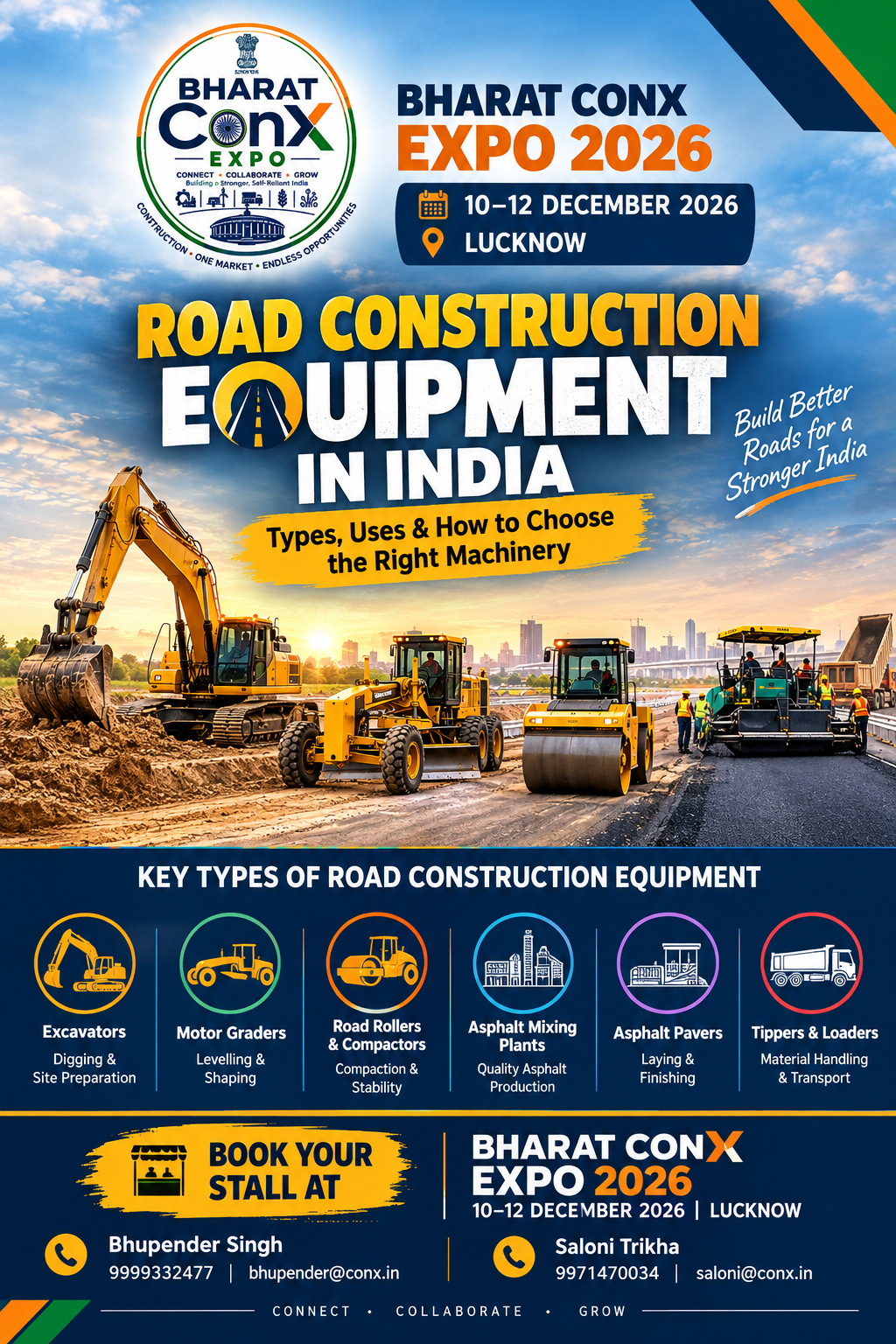
Common types include excavators, motor graders, road rollers, asphalt mixing plants, asphalt pavers, WMM plants, bitumen distributors, wheel loaders, tippers and road marking machines.
Which machine is used for road levelling?
Motor graders are commonly used to level and shape road formations. The appropriate machine and method depend on the material, required accuracy and construction stage.
Which equipment is used for asphalt road construction?
Asphalt road projects may use an asphalt mixing plant, tippers, an asphalt paver, road rollers and bitumen application equipment, depending on the pavement design and construction method.
Should a road contractor buy or rent construction equipment?
The decision depends on expected utilisation, project duration, cash flow, maintenance capability, rental availability and the cost of owning and operating the equipment.
What should buyers check before purchasing road construction machinery?
Buyers should evaluate technical specifications, productivity, operating costs, fuel efficiency, service support, spare-parts availability, warranty and compliance with project requirements.
Where can industry professionals learn more about road construction machinery and infrastructure solutions?
Professionals can consult manufacturers and authorised dealers, review technical documentation and attend relevant industry exhibitions. Bharat ConX Expo 2026 in Lucknow is one event focused on construction machinery and infrastructure-related business sectors.
Conclusion
Road construction equipment in India plays a vital role in preparing the ground, producing construction materials, laying pavement and achieving the required compaction and finish. Selecting the right machinery requires a clear understanding of the project, production requirements, operating costs and after-sales support.
For contractors and infrastructure businesses, informed equipment selection and effective coordination between machines can help improve productivity and reduce avoidable delays. Comparing suppliers carefully before investing is an important step towards successful road construction projects.
Explore construction equipment, road machinery and infrastructure business opportunities at Bharat ConX Expo 2026 in Lucknow, taking place from 10–12 December 2026.